


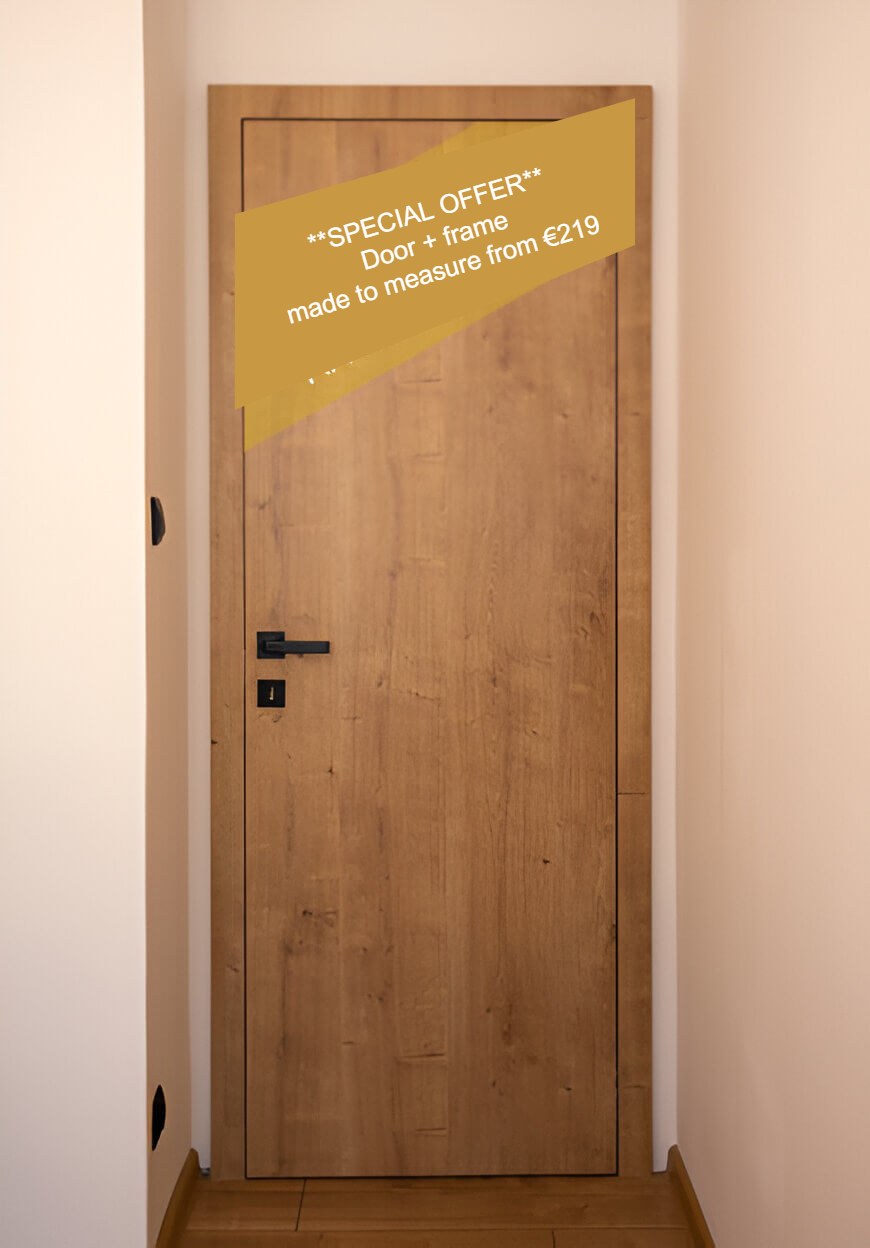
If we say the word Functionalism, it evokes a feeling of coldness in us, floods us with images of right-angled shapes and the idea that the concept of function is quite far from cosiness. But is that really so? Functionalism is a style that in the past created the image of modernism, and houses in this style are perceived as beautiful as they are functional and as functional as they are beautiful.

The essence of functionalism is captured by the principle form follows function. Everything is subordinated to functionality and everything unnecessary is removed from the interior. Its basic principles include denying oneself unnecessary, purposeless historical patterns; beauty is sought in simple shapes, pure geometry and airy, bright space. Design and furnishing in this style began to go hand in hand with finances; houses are placed in open space so that rooms are sufficiently lit by daylight, and the transitions between interior and exterior are also significant. The shape of the architecture and design usually derives from a cuboid; a concrete frame and strip windows are typical. The colour scheme is usually white or subtle in colour. Interiors with smooth varnished wood on the floor are characteristic, as is the use of materials of the modern age such as glass, chrome or imitation leather. Furniture made of bent chrome-plated tubes, reflecting the Bauhaus school, is popular.


From the point of view of architectural history, Functionalism is a style that arose in the mid-20th century as a reaction to the ostentatious, luxurious aesthetic and excessive ornamentation of the styles of the late 19th and early 20th centuries. This style is always accompanied by two sayings: the first, already mentioned, “form follows function” by the American architect Louis Sullivan, and the second, “ornament is a crime”, by the Moravian-born architect Adolf Loos.


The best-known work in the former Czechoslovakia is certainly the iconic building of functionalism, the Tugendhat Villa in Brno. Villa Tugendhat is the work of the German architect Ludwig Mies van der Rohe, who designed the villa in 1928 for the spouses Fritz and Greta Tugendhat. The villa is regarded as a building that set new standards in the conception of modern living and is among the fundamental works of world modern functionalist architecture. The villa was groundbreaking for its time in
- Uninterrupted living space with glazed walls
- The ceilings of the upper floor are carried not by walls but by a steel frame that forms the skeleton of the villa
- Connecting the interior with the exterior was very simple, by sinking some of the windows entirely into the ground.
The building is considered Mies’s most important pre-war work. The author is regarded as the father of modern architecture of the 20th century.


Bauhaus
The Bauhaus school was founded in 1919 in Weimar, Germany, with the aim of combining avant-garde art with design and architecture and improving society. In 1922, under the influence of Constructivist ideas, the school established a close relationship with industry. The founder of the Bauhaus, the architect Walter Gropius, derived the name of the school from the word Bauen – to build. Creators from various fields formed communities of artists and craftsmen. Under Gropius’s founding manifesto they aimed to “build the cathedral of the future”.


Functionalism summary
- Everything is subordinated to functionality and everything unnecessary is removed from the interior.
- Its basic principles include denying oneself unnecessary, purposeless historical patterns
- Beauty is sought in simple shapes, pure geometry and airy, bright space
- The shape of the architecture and design usually derives from a cuboid.
- A concrete frame and strip windows are typical, with a floor of smooth varnished wood.
- The colour scheme is usually white or subtle in colour.
- Use of “new” materials: glass, imitation leather, chrome
Suggested colour scheme:




Contact us
If you have any questions, do not hesitate to contact us or visit us at one of our branches in Čachtice, Bratislava or Trnava.

Addresses
Production: ČACHTICE 1025
Shop: BRATISLAVA
Rača, Cyprichova 4
Showrooms:
TRNAVA, Jerichova 288
ŽILINA, Pivovarská 1068

