


Slovakia, as we know it, has many natural beauties, but one it lacks: the sea. From holidays and trips we bring back memories of the romantic nooks of seaside towns. For many people these memories last so long that they long to bring them home and recall them in their own interior.
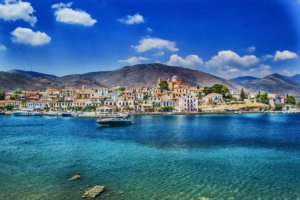
This style can take many forms depending on which Mediterranean country inspires us. Whether it is colourful Spain, Greece or Tuscany, where colours turn to earthy shades, olive, yellow or the colour of the sea in many shades. Every country or region around the Mediterranean has its typical features, so everyone can choose what brings back memories of their travelling days.
White is never a step wrong, and in seaside style this is doubly true.
The basic main colour is white, which absorbs the sun’s rays perfectly, lights up the whole space and so gives it an airy feel. We can find this colour everywhere, not only on the walls but also on the floor, the furniture or the decorations. White combines easily with other colours and so complements the colours typical of the area you take your inspiration from. Whether it is the shades of blue typical of Greece or the purple that is the hallmark of Provence. The combination of white with earthy colours, the colour of sand or terracotta, in turn represents the Spanish or Italian coasts.
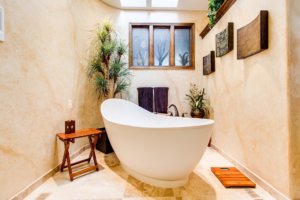
Seaside style makes great use of materials that look natural. In particular solid wood, wicker, palm wood or rattan. As for textiles, coarser woven materials (sacking) are often used. It is not unusual to find a stone floor or stone cladding on a wall.
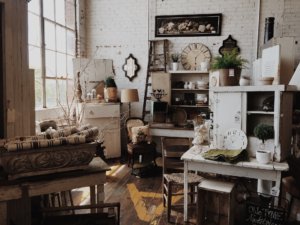
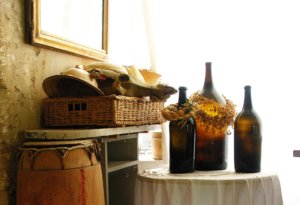
The natural scenery of seaside style is not only about the sea; the nature on the coast plays a big role too, which is why plants in the interior are also typical of this style. Herbs, citrus trees, various kinds of palms, lavender, a fig tree or an olive tree: these characteristic plants evoke the right atmosphere of the given Mediterranean region. Plants stand out best in simple terracotta pots.
Typical elements of seaside style
- natural materials such as: wood, stoneware, wicker, cotton
- naturalness; a worn look can easily be replaced by patina
- the predominant colour is white combined with a complementary colour
- coarse textiles on the walls or floor
- Plants such as herbs, citrus trees and various kinds of palms
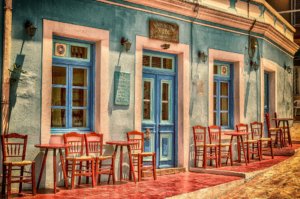

Tuscan style
Similar to Spanish, but much more colourful. Warm colours reflect the colourful countryside. Colours from golden through olive green to brick red. Striking hardware and ornaments on decorations reminiscent of grapevines are very popular in this style. Coarse coloured plasters and terracotta ceramics are proud representatives of Tuscan style.
Nautical style
The iconic combination of white and blue, sometimes complemented by red, must not be missing. This style could not do without a striped pattern, without which nautical style would not be nautical. It appears mainly on textiles or accessories, or is even a pattern on the walls. Choose your accessories with discernment; it need not be only about shells, models of sailing boats, lifebuoys or ship’s anchors. Rather, focus your attention on honest materials and try to bring airiness into the space.
Spanish style
Austerely elegant, often with contrasting colours. Walls white or in shades of brown with dark wooden elements. Furniture with heavy, massive, decorated hardware. In this style we often find a mixture with colonial style.
Greek style
Greek style is typified by a very simple yet iconic blue and white combination. Roughly whitewashed white walls with accents of blue or mint green. The range of blue, the so-called Greek Blue, runs from the darkest shades of the sea to the azure of the sky.
With this style, forget wallpaper or wooden wall panelling; the main role is played by roughly plastered white walls with a ceramic floor, which is often replaced by a wooden one. Wicker armchairs and sisal or coconut-fibre carpets are typical.
Furniture painted in basic colours gives an impression of fading and does not attract much attention.




Contact us
If you have any questions, do not hesitate to contact us or visit us at one of our branches in Čachtice, Bratislava or Trnava.

Addresses
Production: ČACHTICE 1025
Shop: BRATISLAVA
Rača, Cyprichova 4
Showrooms:
TRNAVA, Jerichova 288
ŽILINA, Pivovarská 1068

